Ask whoever handles sales to describe your company in one sentence. Ask the person who answers support tickets the same thing, then read your homepage headline out loud. If you get three different answers, everyone is improvising, and prospects meet a slightly different company depending on who they talk to first.
Positioning fixes that. It is a short, written decision about which customer you serve, what they use today instead of you, and why you are the better choice for them. Done well, it fits on half a page and anyone on the team can repeat it without notes. Below is what goes into it, a template you can fill in this week, and a way to check that it holds up outside the founder's head.
Positioning is a choice of who you are not for
Weak positioning usually comes from a fear of losing someone. The founder wants the product to sound useful to agencies, in-house teams, freelancers and large companies, so the description ends up fitting none of them particularly well.
Strong positioning names a customer narrowly enough that some readers will think "this is not for me". That reaction is a sign it is working. When someone who does fit reads it, it should sound like a description of their week.
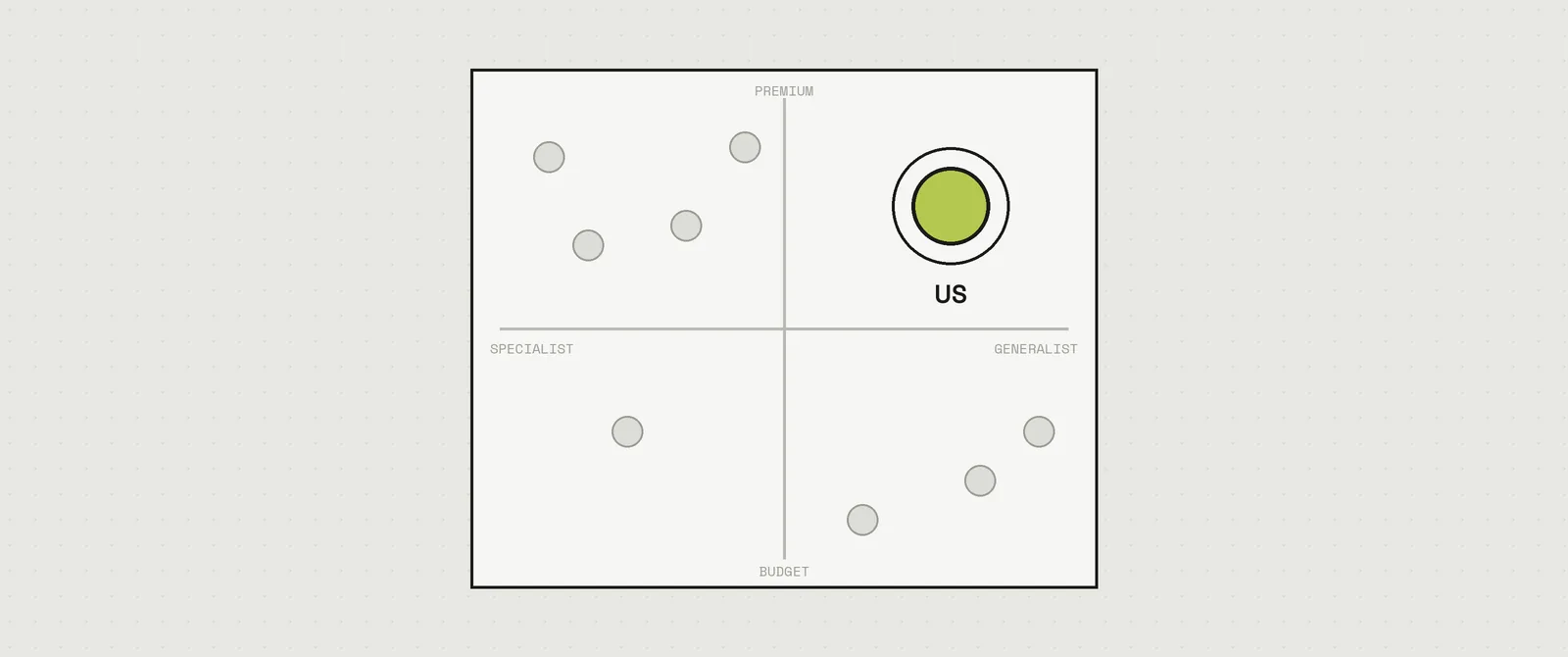
Say you run a refill cleaning brand. "Eco-friendly cleaning products for everyone" puts you on the same shelf as every supermarket brand with a green label. "Refill tablets for people in small apartments who are tired of storing bulky spray bottles" rules out plenty of buyers. It also gives the ones who remain a clear reason to switch.
A useful exercise before you write anything else: list the groups who could plausibly buy from you but whom you will not design for, write for or target with ads. If writing that list feels uncomfortable, you are probably getting close.
The five parts of a positioning statement
Each part answers one question. Write every answer as a plain sentence first.
The customer
Describe the buyer by their situation, not by demographics. "Operations managers at logistics companies with 20 to 50 staff" beats "B2B decision makers". Better still is the moment that triggers the purchase, such as "who just lost the one colleague who understood the order spreadsheet".
The problem
Write the problem the way the customer would say it to a friend, not the way your product team describes it in a roadmap. People rarely complain about a lack of "operational visibility". They complain about finding out an order is late from an angry email.
The alternative they use today
This is the part teams skip most often, and it matters most. Your real competitor is frequently not another company. It might be a spreadsheet, a part-time assistant, a habit or simply doing nothing. Name it as specifically as you can. If you cannot say what the customer does today without you, you do not yet understand why they would buy.
What you do differently
Compared with that alternative, what changes for the customer? Pick one or two differences they would actually notice. "AI-powered" describes how the product is built. "Flags late orders before the customer emails you" describes something the buyer will feel.
Proof
Proof is whatever makes the difference believable: a demo the buyer can try in a few minutes, a guarantee, a specific feature they can see, reviews from real customers once you have them. Never invent it. If you have little proof yet, say what you can show today and make collecting more a priority.
A fill-in template
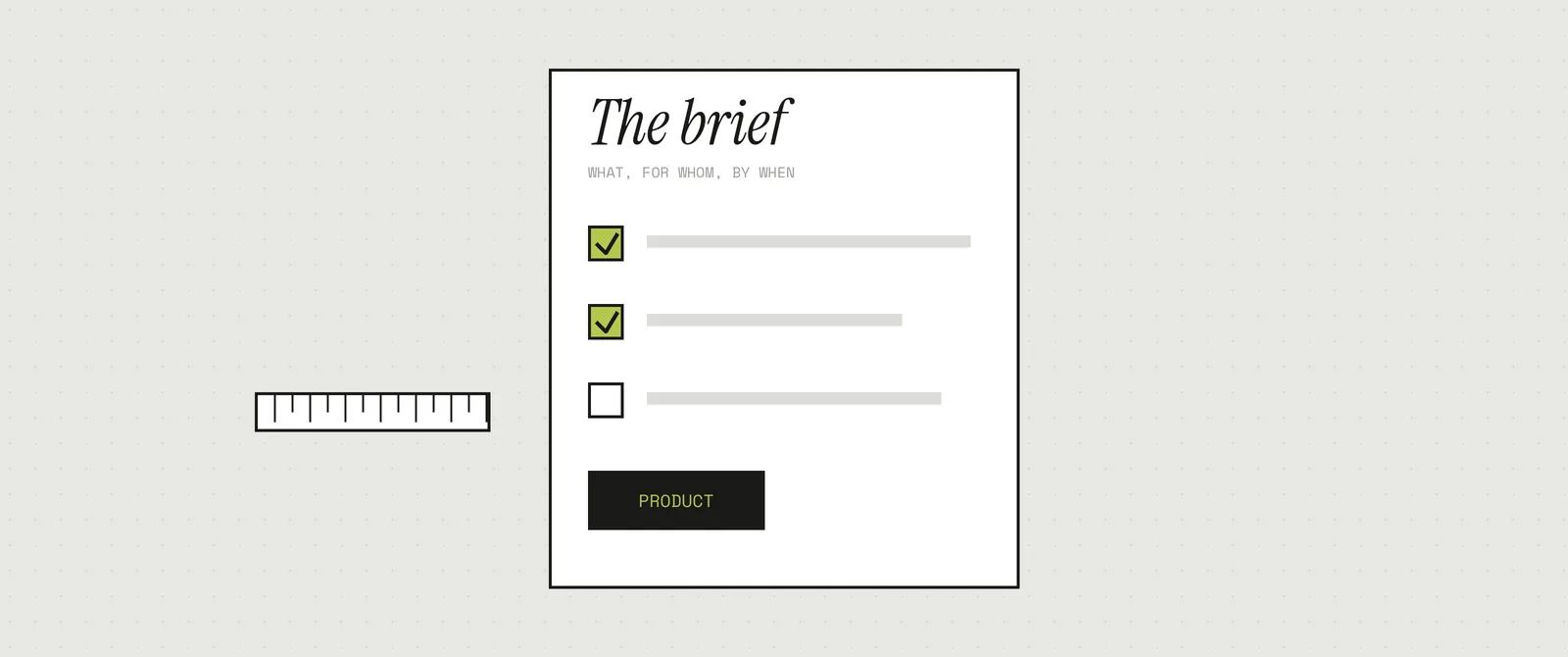
Copy this into a document and fill each bracket with a single sentence. Resist the urge to add a second one.
- For: [the specific customer, described by their situation]
- Who struggle with: [the problem, in their words]
- And today rely on: [the alternative they currently use]
- Your product is: [the category you want to be filed under]
- That: [the one or two differences they would notice]
- They can believe it because: [the proof]
- It is not for: [the people you have chosen not to serve]
Filled in for the hypothetical refill brand, it might read like this:
For people in small apartments who clean every week and resent a cupboard full of half-empty sprays, and who currently buy supermarket bottles and throw away the plastic, this is a compact refill kit that turns one small tablet and tap water into a full bottle of cleaner. They can believe it because the starter kit, a few glass bottles and a pouch of tablets, fits in a kitchen drawer. It is not for people who want to grab one product off the shelf and never think about it again.
Then write the short version, one sentence a salesperson could say to someone at a party. For the refill brand: compact cleaning refills for people who have run out of cupboard space. That sentence is the one that will actually travel, so spend time on it.
How to test it
Positioning only exists when other people can say it, so test it with other people.
- The repeat test. Share the half page with everyone who talks to customers. A week later, ask each of them to describe the company in one sentence without looking. They do not need to match word for word, but they should name the same customer and the same difference.
- The homepage test. Show your homepage headline and the paragraph under it to someone outside the company. Ask them who it is for and what it replaces. If they cannot answer, the site is still describing the product rather than the position.
- The inbox test. Read the last twenty support tickets or sales emails. Note the words customers use for their problem and compare them with your statement. Customers often hand you better wording than anything you wrote.
- The rejection test. Show it to someone in your "not for" group. If they shrug and say it is not for them, the statement is doing its job.
When the answers do not line up, fix the statement before you fix the people. Usually one of the five parts is vague, and everyone fills the gap with their own guess.
Common mistakes
- Describing the category instead of the difference. "Project management software for teams" says where you sit, not why anyone would pick you.
- Adding every audience. Each extra group makes the statement less true for all the others.
- Comparing only with direct competitors. Many buyers are really choosing between you and a spreadsheet, or between you and waiting until next quarter.
- Rewriting it every month. Positioning needs time in the market before you can judge it. Change it when customers teach you something, not because the homepage feels stale.
- Keeping it in one head. If the founder is the only person who can explain it, the rest of the team will keep improvising.
Where to start
- Write the five parts as plain sentences, one each.
- Add a "not for" line that is specific enough to sting a little.
- Fill in the template, then write the one-sentence short version.
- Send it to everyone who talks to customers and run the repeat test a week later.
- Update the homepage last, once the team can already say it the same way.